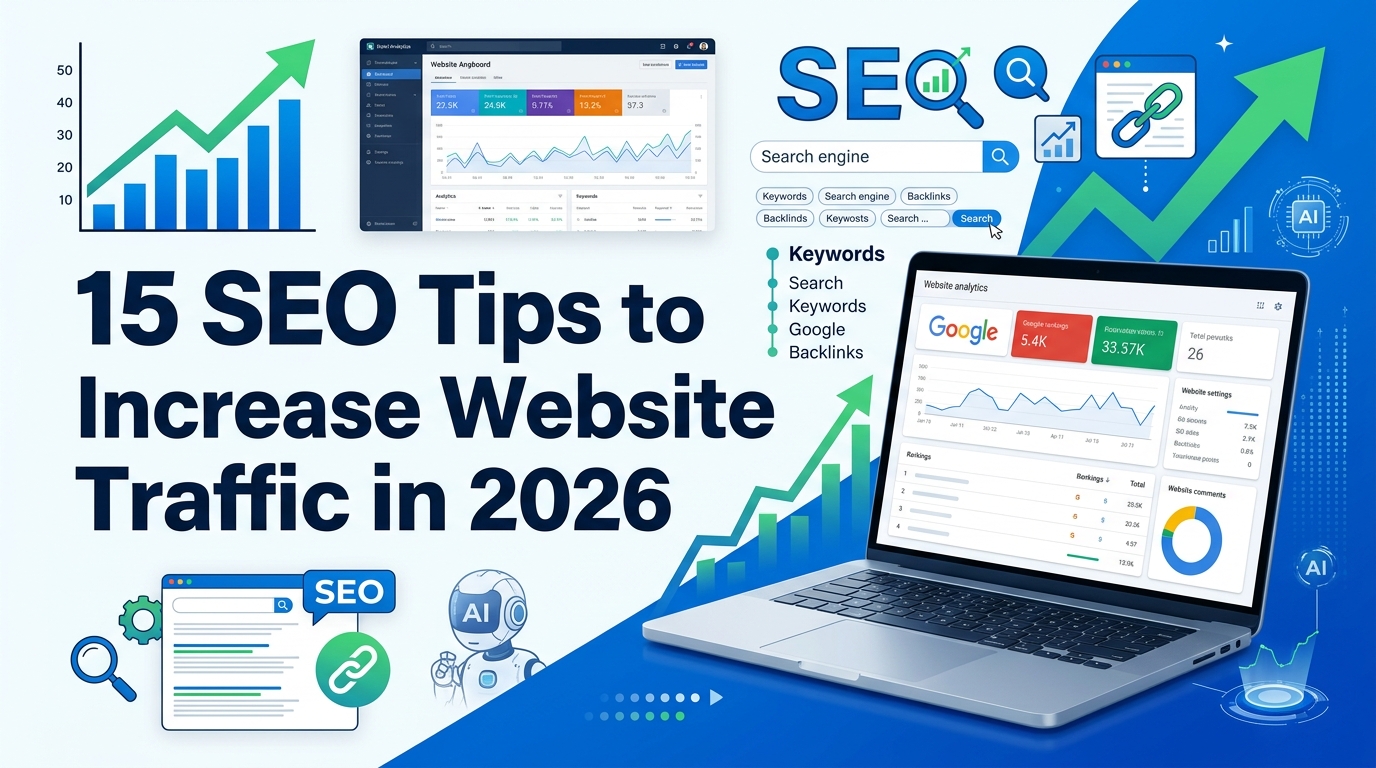
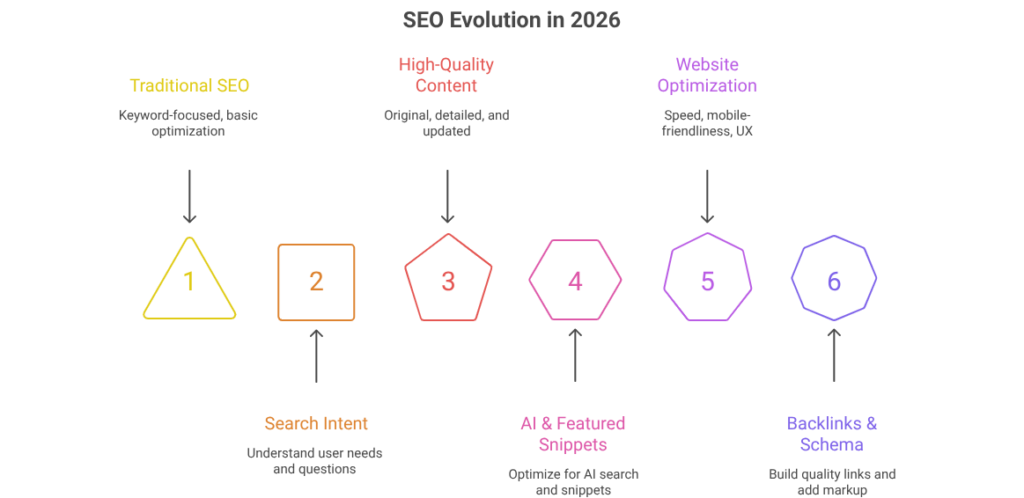
Search engine optimization (SEO) continues to evolve, and businesses that adapt to the latest trends gain a significant advantage over their competitors. In 2026, ranking on Google is no longer just about keywords—it’s about creating valuable content, providing a great user experience, and leveraging AI-powered search trends.
Whether you’re running a blog, an eCommerce store, or a business website, these 15 SEO tips will help you increase website traffic and improve your search engine rankings.
1. Focus on Search Intent
Google prioritizes content that satisfies user intent. Before writing any article, understand what users are looking for.
There are four types of search intent:
- Informational
- Navigational
- Commercial
- Transactional
Create content that directly answers users’ questions and solves their problems.
2. Perform Keyword Research Strategically
Keyword research remains one of the foundations of SEO.
Use tools like:
- Google Keyword Planner
- Ahrefs
- SEMrush
- Ubersuggest
Focus on:
- Long-tail keywords
- Low-competition keywords
- Question-based keywords
These keywords often bring targeted visitors who are more likely to convert.
3. Create High-Quality Content
Content is still king in 2026.
Google rewards websites that provide:
- Original information
- Detailed explanations
- Updated content
- Practical solutions
Aim to publish content that is more valuable and comprehensive than competing pages.
4. Optimize for AI Search and Featured Snippets
AI-powered search results are becoming increasingly important.
To improve visibility:
- Use question-based headings.
- Add bullet points and numbered lists.
- Write concise answers.
- Include FAQ sections.
This increases your chances of appearing in featured snippets and AI-generated search summaries.
5. Improve Website Loading Speed
Page speed is a major ranking factor.
To make your website faster:
- Compress images.
- Use caching plugins.
- Enable lazy loading.
- Choose reliable hosting.
A fast website improves both SEO rankings and user experience.
6. Make Your Website Mobile-Friendly
More than half of all internet traffic comes from mobile devices.
Ensure that your website:
- Uses responsive design.
- Has readable fonts.
- Loads quickly on smartphones.
- Provides easy navigation.
Google uses mobile-first indexing, making mobile optimization essential.
7. Optimize Title Tags and Meta Descriptions
Your title tag and meta description influence click-through rates.
Best practices include:
- Include the target keyword.
- Keep titles under 60 characters.
- Write compelling descriptions.
- Encourage users to click.
Example:
Title: 15 SEO Tips to Increase Website Traffic in 2026
Meta Description: Discover 15 proven SEO strategies to boost website traffic, improve Google rankings, and grow your business in 2026.
8. Use Internal Linking
Internal links help search engines understand your website structure and distribute authority across pages.
Benefits include:
- Better indexing
- Increased page views
- Improved user experience
Link related blog posts and service pages whenever possible.
9. Build High-Quality Backlinks
Backlinks remain one of Google’s strongest ranking signals.
Ways to earn backlinks:
- Guest blogging
- Creating valuable resources
- Publishing case studies
- Writing original research
- Digital PR campaigns
Focus on quality rather than quantity.
10. Optimize Images for SEO
Images can drive additional traffic through Google Images.
Best practices:
- Use descriptive file names.
- Add alt text.
- Compress images.
- Use modern formats like WebP.
Proper image optimization improves page speed and accessibility.
11. Update Old Content Regularly
Refreshing existing content is one of the easiest ways to increase rankings.
Update:
- Statistics
- Screenshots
- Examples
- Internal links
- Keywords
Google prefers fresh and relevant information.
12. Add Schema Markup
Schema markup helps search engines understand your content better.
Common schema types include:
- Article schema
- FAQ schema
- Product schema
- Local business schema
Rich snippets can improve visibility and increase click-through rates.
13. Focus on User Experience (UX)
Google measures user engagement signals such as:
- Bounce rate
- Time on page
- Page experience
Improve UX by:
- Using clear headings.
- Adding images and videos.
- Creating easy navigation.
- Reducing clutter.
A better user experience often leads to better rankings.
14. Publish Content Consistently
Consistency is key to long-term SEO success.
Develop a content calendar and publish regularly.
For example:
- 2–3 blog posts per week
- Monthly pillar content
- Seasonal articles
- Industry updates
Regular publishing helps search engines crawl your site more frequently.
15. Track SEO Performance
SEO is an ongoing process.
Use tools such as:
- Google Search Console
- Google Analytics 4
- Ahrefs
- SEMrush
Monitor:
- Organic traffic
- Keyword rankings
- Click-through rates
- Bounce rates
- Conversion rates
Analyzing data allows you to refine your strategy and achieve better results over time.
Final Thoughts
SEO in 2026 is about much more than simply adding keywords to your pages. Search engines now prioritize quality content, user experience, page speed, mobile optimization, and relevance.
By implementing these 15 SEO tips, you can improve your website’s visibility, attract more organic traffic, and stay ahead of the competition.
The earlier you start optimizing your website, the greater your chances of achieving long-term success.